'The government has to explain (to the army, air force and navy chiefs) whether they want a punitive strike, a deep punitive strike, or whether they want limited war or an all-out war, will it be a circumscribed war or will it be a shallow attack along the border.'

The Lashkar-e-Tayiba operative also revealed about his training while he deposed in front of a Mumbai court via video link.

Senior analyst B Raman on how India should react to 26/11 accused David Headley's testimony in co-accused Tahawwur Hussain Rana's ongoing trial in a Chicago court.
United States State Department spokesman Mark Toner's statement has been an encouraging one for Indian investigating agencies probing the David Headley case.
US officials have agreed to take "suitable steps" in giving India a direct access to Headley, a statement released by the Indian Embassy in Washington said on Wednesday.
India may get access for the second time to Mumbai attack terrorist David Headley and his accomplice Tahawwur Hussain Rana, currently in the custody of the United States, for questioning. The positive indication was given by Washington to New Delhi during a recent bilateral meeting held in America.
The United States on Saturday said it will allow Indian investigators to interrogate David Headley, who has pleaded guilty to his involvement in the Mumbai terror attacks, but made it clear that he cannot be extradited to India.
The United States will consider giving Indian authorities access to David Headley for additional questioning by its investigating agencies about his role in the Mumbai terror attacks, the State Department has said. "In the past, we have given India full access to Headley, and I think that when a case is in litigation it's impossible to do that. But moving forward, I think we would consider further access," State Department spokesman Mark Toner said.
United States would consider giving India further access to David Headley, who has pleaded guilty in the Mumbai terrorist attacks case, for questioning by its investigating agencies once New Delhi makes such a request, the state department has said.

'India has established probable cause to prosecute him for his role in terrorist attacks that resulted in 166 deaths and 239 injuries'
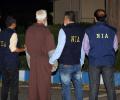
'It is ensured that no adversaries or people who oppose Tahawwur Rana's philosophy are housed in the same ward or jail.' 'Additionally, it is ensured that he does not have any prior contacts within that jail.' 'So, the lodgment of such a high-profile prisoner is done very carefully.'
Indian fell vindicated when Lashkar-e-Tayiba operative David Coleman Headley testified that the ISI had trained him in terror. But on Tuesday, Headley did a U-turn as he gave a clean chit to Pakistan's spy agency. Hoping to nail the ISI in the 26/11 case, Indian intelligence agencies say that Headley's changing versions come as no surprise to them. Vicky Nanjappa reports.
Amid reports that the Obama administration was upset over Indian officials going into the details provided by Headley, State Department spokesman P J Crowley said the US values cooperation with India on combating terrorism but it places responsibility on both countries.
Indian investigators say that Headley was not a womaniser but used women as a perfect cover for his operations. The IB says that this is contrary to the image Headley portrayed during his interrogation by the FBI. He came across as a devout Muslim, who was very uncomfortable with women.
David Coleman Headley, arrested by the FBI for plotting a major terror attack in India at the behest of the LeT, had visited the country, including Mumbai, several times, Home Secretary G K Pillai said today.

India has sought access from the United States to the 26/11 Mumbai terror attack convict David Headley and his accomplice Tahawwur Rana -- both of whom were sentenced by a Chicago court after being found guilty of terrorism charges.
The US administration had informed the Indian government before it finalized a deal with David Coleman Headley to change his plea to guilty, sources said.
Determined to seek the extradition of Pakistani-American terrorist David Coleman Headley and access to him, India will raise the issue with US at the official-level during Prime Minister Manmohan Singh's four-day visit to the US.
Roemer said, "Headley may well be responsible for canvassing, tracking information to pass on to attackers of Mumbai blast. This is the sort of the thing that the US is extremely serious about. We want, along with Indian people and Indian government, to bring him to justice."
The Indian government has cancelled visas of Pakistani-origin terror suspects and Lashkar-e-Tayiba operative David Coleman Headley and Tahawwur Rana, according to sources.
In a long battle, this is Rana's last legal chance not to be extradited to India.

"The difference between the state and non-state actors will come to an end after this statement," Minister of State for Home Kiren Rijiju told reporters.
Opposition leaders in India have expressed hope that Prime Minister Narendra Modi raised the issue of the deportation of Indian illegal immigrants from the United States during his recent visit. They criticized the manner in which the Indians were sent back, shackled and handcuffed on a military aircraft. The leaders also discussed the need for India to address the root causes of migration and the importance of national interest in diplomatic relations with the United States.
"We are burning the midnight oil, working our fingers to the bone," he said, to ensure access to Headley for India, as it was "so important to India, the Indian people, the Indian government."

India has sought access to Lashkar-e-Tayiba operative David Headley, the Mumbai terror attack convict now lodged in a US prison, as it insisted on bringing to justice the perpetrators of the 26/11 assault.

'As Rana is not an Indian citizen, our leverage on the US system -- whether it's their judiciary or the executive -- is very limited in that sense.'
Pakistan has handed over another dossier on Lashkar-e-Tayiba operative David Coleman Headley to India seeking more information about his role in the 26/11 Mumbai terror attacks.Pakistan's High Commissioner to India Shahid Malik met Interior Minister Rehman Malik in Islamabad, briefing him over the latest development concerning the issue.Headley, an American citizen of Pakistani origin, was arrested by the US Federal Bureau of Investigation in October 2009.
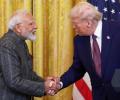
The United States has approved the extradition of Tahawwur Rana, accused of involvement in the 2008 Mumbai terror attacks, to India. The decision was announced by President Donald Trump during a joint press conference with Prime Minister Narendra Modi in the White House. India is currently working on the logistics of Rana's surrender and extradition, with several final steps to be completed before he is sent back to India. The joint statement issued by India and the US during Prime Minister Modi's visit reaffirmed their commitment to fighting terrorism and eliminating terrorist safe havens. The leaders also called on Pakistan to bring to justice the perpetrators of the 26/11 Mumbai and Pathankot attacks. Rana, a Canadian national of Pakistani origin, is currently lodged at a metropolitan detention center in Los Angeles. He is associated with Pakistani-American terrorist David Coleman Headley, one of the main conspirators of the 26/11 attacks.
Days after Pakistani-American Lashkar-e-Tayiba operative David Headley implicated Inter-Services Intelligence in the Mumbai attacks during his testimony in a United States court, Interior minister Rehman Malik has described him as a convict who has "no credibility and cannot be trusted."
An Indian court may try and convict Lashkar-e-Tayiba operative David Headley for his role in the 26/11 attacks on Mumbai, but the conviction would merely be a symbolic one.
Investigators probing US terror suspect David Headley's visit to India have found that certain periods of his stay in the country remained unaccounted for raising fear that certain undesirable local elements might have helped him during his tour.
David Headley dominated the discussions between the CIA and their Indian counterparts on Monday.
India on Wednesday requested the United States to provide it access to the 2008 Mumbai terror attacks accused David Coleman Headley and Tahawwur Hussain Rana, visiting External Affairs Minister S M Krishna said.
The Indian establishment may get a leverage while talking to American officials on bilateral efforts of counter-terrorism while the media splashes scary details about what Headley did in India, points out Sheela Bhatt
Home Secretary G K Pillai said if Headley gets severe punishment and comes out of the judicial process, it would be easier for India to get access to the Pakistan-born American national in jail. "If he is given a light sentence, it would not only be disappointing but we will be registering a very strong protest with the US," Pillai told NDTV hours ahead of the hearing against Headley in Chicago.
While the Union home ministry issues statements time to time that it is hopeful about Headley's extradition, many within the establishment know for a fact that it is beyond impossible for this to happen thanks to the plea bargain secured by the Lashkar operative

Reacting to David Headley's sentencing, Foreign Minister Salman Khurshid said on Friday that in India the trial of the Pakistani origin American would have been more severe and would have been given a longer jail term for his role in the 26/11 Mumbai attacks.
India has asked the United States to provide statements of 13 people associated with Lashkar-e-Tayiba terrorist David Headley and his accomplice in Mumbai terror attack case Tahawwur Hussain Rana as they could be potential witnesses.
The United States has launched a review of its agencies' handling of inputs provided by two of the three wives of David Headley about his involvement in the 26/11 strikes, a top Obama administration official said on Thursday, even as India expressed disappointment over not being provided specific information on the Mumbai attacks plotter
American-born Lashker-e-Tayiba operative David Headley, accused of plotting the Mumbai terror attack in 2008, had 'hatred' towards India and warned that he would stop helping the probe if his admission of guilt was linked to cooperation with New Delhi.
